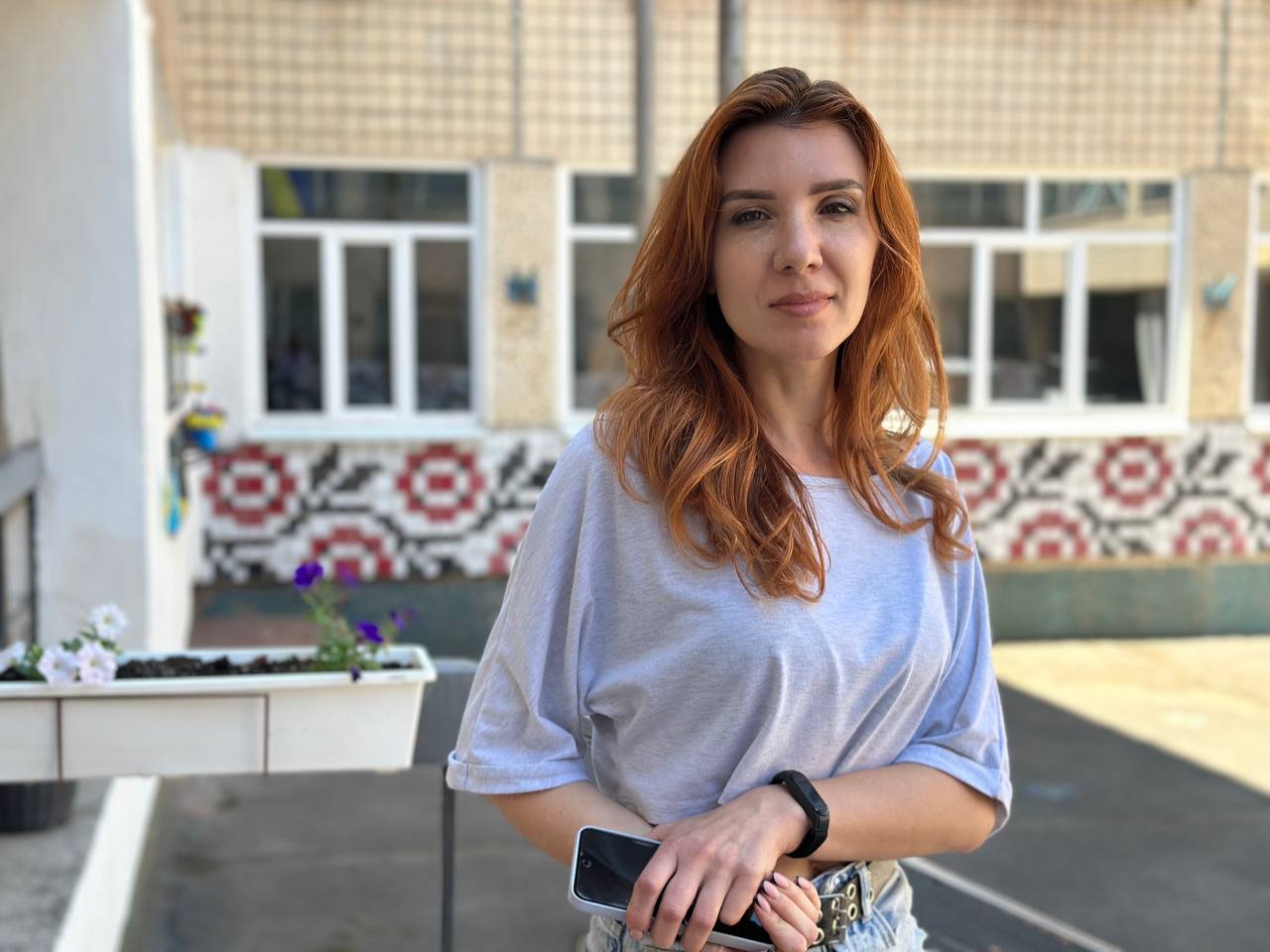
For Maryna, this school is more than a workplace. She once walked its corridors as a student. Today, she walks the same halls as Vice Principal for Extracurricular Activities, watching a new generation of children learn in a building that has had to change with them.
Supporting children with disabilities
Built in 1985, the school was never designed with accessibility in mind.
“When the school was built, inclusion simply wasn’t considered,” Maryna says.
That became increasingly evident as the school began welcoming children with disabilities. In 2019, only one child with special educational needs enrolled. Today, 61 out of roughly 350 in-person learners are children with disabilities. This increase does not necessarily mean that more children have acquired disabilities because of the war. It reflects something else: families increasingly choose this school specifically because of the facilities and support it provides for children with disabilities. Today, every class includes children with diverse learning needs.
“The situation was difficult. We were forced to carry children with disabilities, or their assistants had to carry them, accompanying them constantly,” Maryna remembers. Something as ordinary as moving between classrooms or using the toilet required help from an adult. Independence was not an option.
With support from CARE Ukraine and its partner Stabilization Support Services, that has begun to change.
A second school below ground
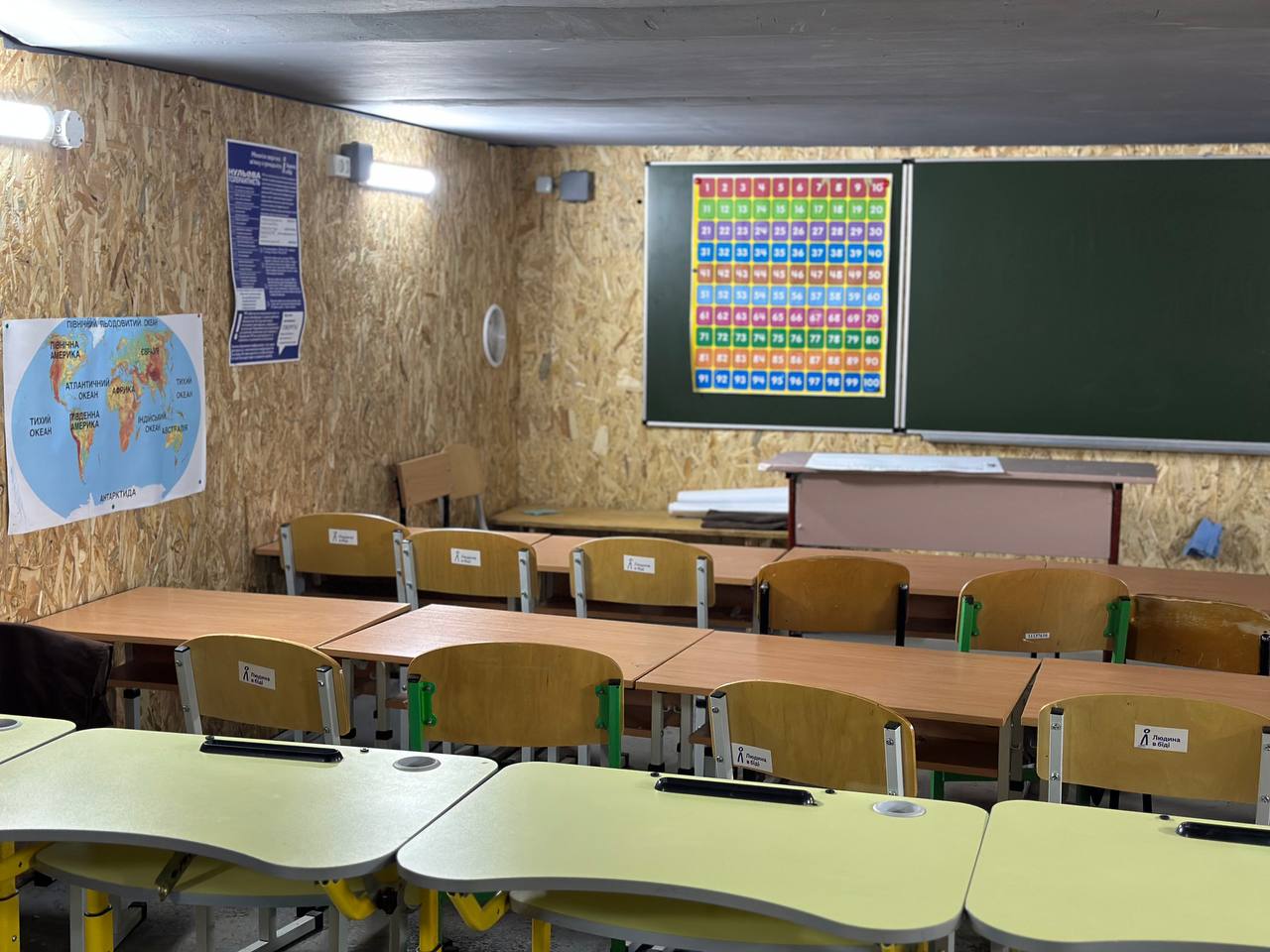
Air raid alerts are now part of daily school life, and so is the basement. Several times a day, sometimes for most of the day, all 350 in-person students move down into the shelter to continue learning.
Over time, the school has built what amounts to a second school below ground with classrooms, learning corners and services mirroring what exists upstairs. The ceilings are low, forcing adults to stoop as they move between rooms, but the space itself is neat, clean and carefully organised, with the same attention to detail as the classrooms above.
With support from CARE Ukraine and its partner ‘Stabilization Support Services’, the school has also begun addressing accessibility. A new outdoor ramp now allows children using wheelchairs to enter the school from the opposite side of the building on their own. An accessible restroom has also been constructed on the ground floor, next to the classrooms used by students with special needs.
“The difference is significant,” Maryna says. “Children using wheelchairs can now enter independently. Some parents bring them to school, and they can move around much more easily. The accessible restroom is located on the first floor, right next to the classrooms, so children can use it privately and return to class. It has made life much easier for both the children and their assistants.”
For Maryna, these improvements are about much more than infrastructure. They are about giving children greater independence and making everyday school life simpler, more dignified and more inclusive.
Built for everyone
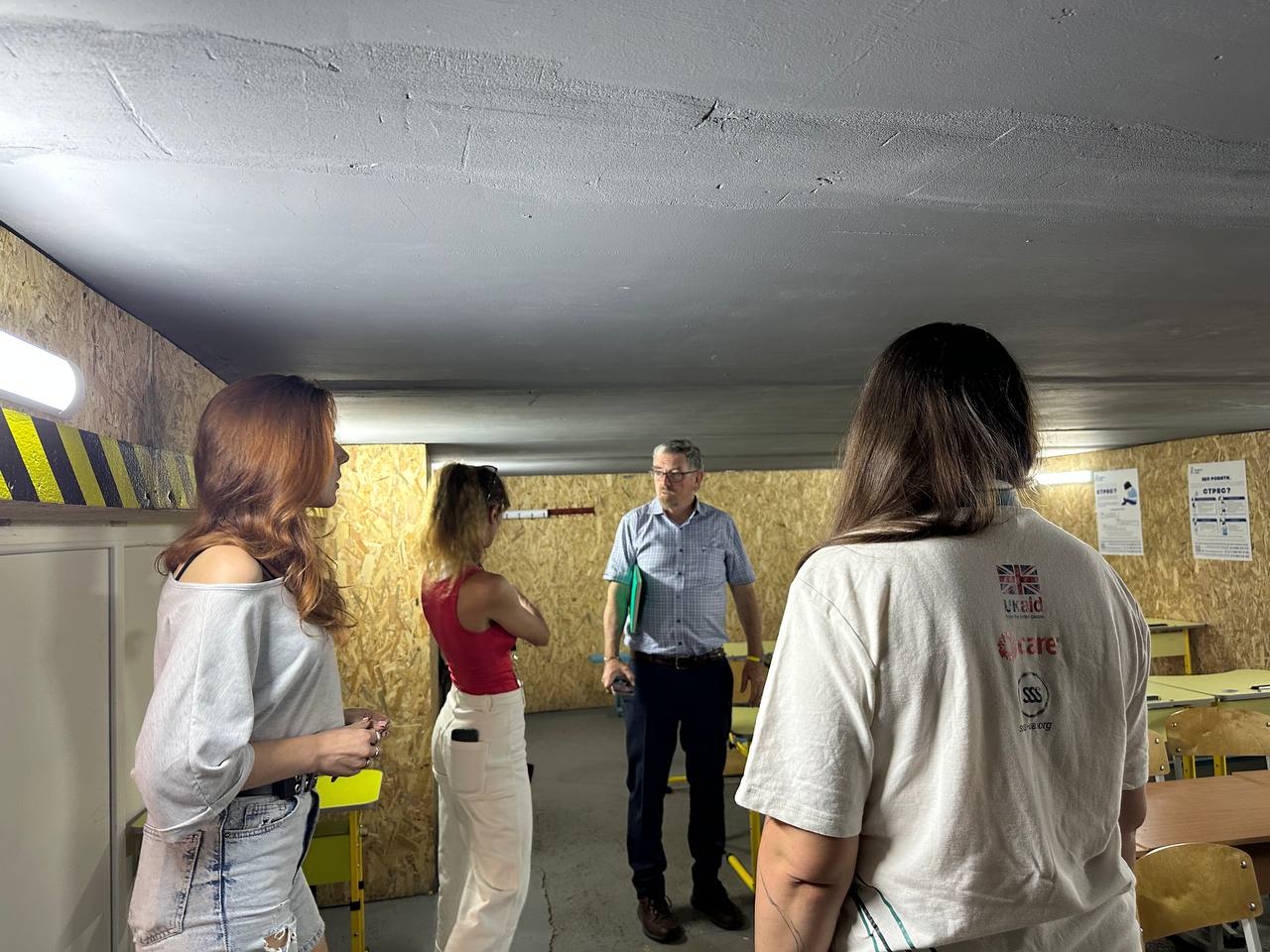
Today, around 600 students are enrolled at the school, including children who continue learning remotely from abroad. Around 350 attend classes in person every day. Families increasingly choose the school because it continues face-to-face learning every day, including during air raid alerts, with dedicated learning spaces in the shelter.
As more children with special educational needs join the school, Maryna sees the changes as an important step toward ensuring every child can fully participate in school life.
“We started with one child,” she says. “Now there are 61. Inclusion has become part of who we are as a school. The new ramp and accessible restroom have removed barriers that our children faced every single day. Now they can focus on what really matters — learning alongside their classmates.”
To continue supporting humanitarian responses to emergencies like the war in Ukraine, donate to CARE’s Global Emergency Fund today.