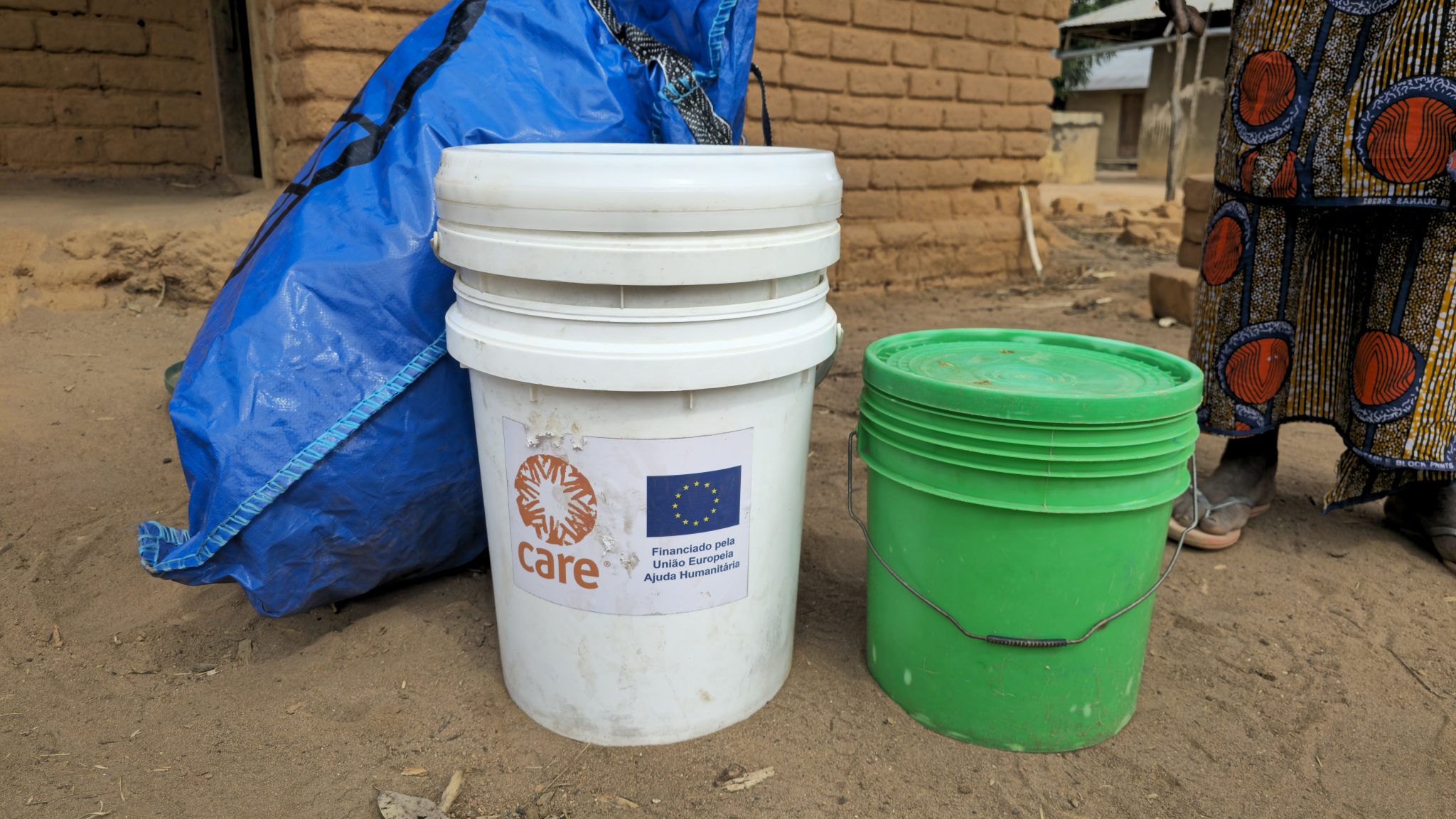
In Northern Mozambique, Cabo Delgado, CARE distributes to participants a shelter kit: blankets, mats, mosquito nets, pots and other kitchen supplies, solar lamp and a hygiene set including buckets, 12 bar of soaps, laundry detergent, water purification solution and a capulana, a traditional fabric.
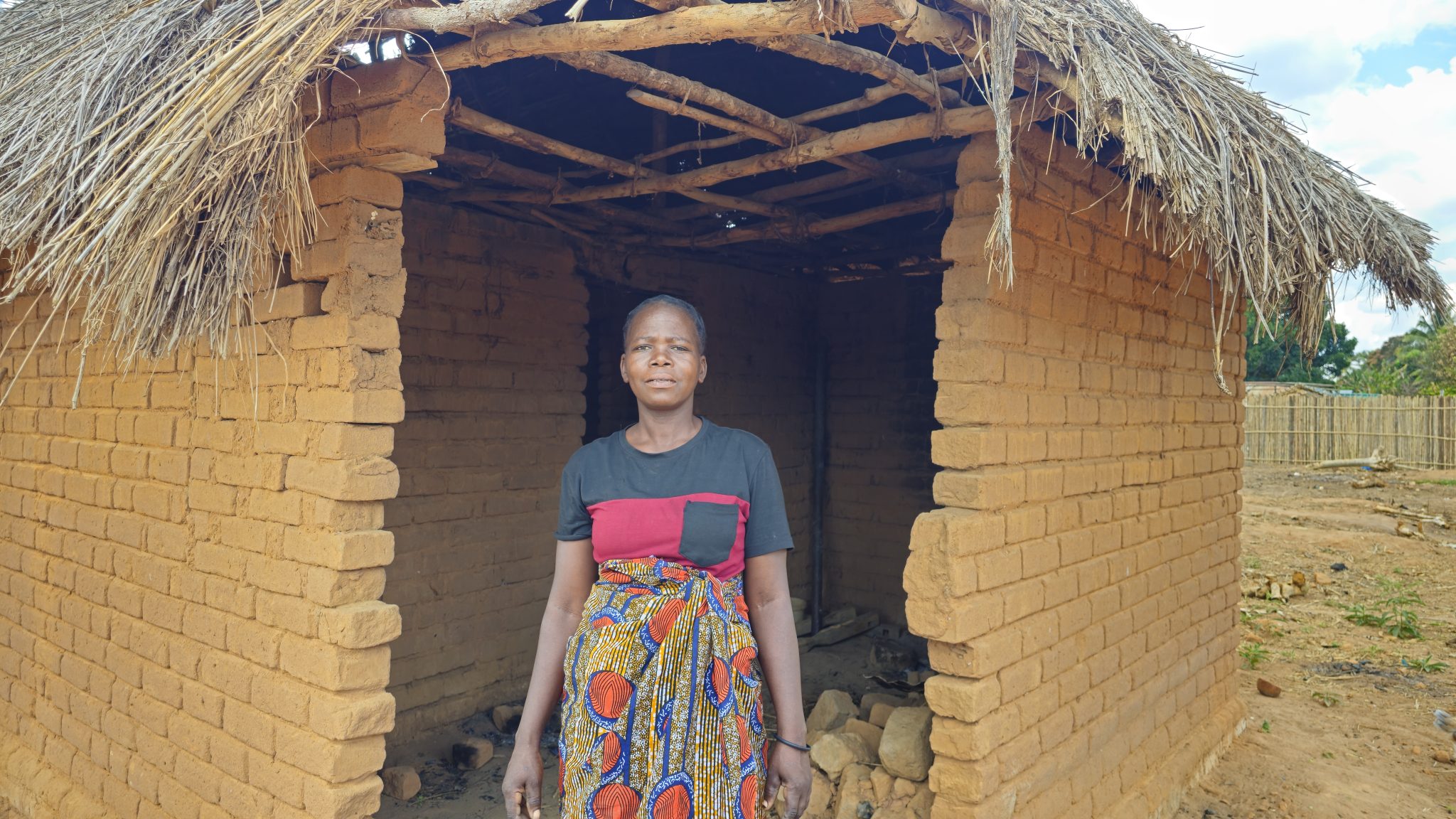
“I never had a real new bucket,” says Joaquima, 35, a mother of four, as she crouches next to her hut to pick up an old, bright green bucket of water and place it on her head for transport.
This is an old bucket I received from my mother. I have used this for many years every single day to fetch water from the river.
Finding water is difficult in the northern province of Cabo Delgado in Mozambique. Climate change is causing droughts where water holes dry up. Rivers turn into small puddles. The soil is dry sand.
Sometimes the women of Joaquima’s village wait in the bush next to old water holes for water to appear, but none comes. It is dry.
Normally, the rainy season at the beginning of the year brings enough water for the groundwater to rise and last the whole year. But there is not enough rain anymore.
Joaquima is used to it, she has never had access to a waterhole, and her family cannot afford a water tank for themselves. So, she walks. Every day.
I walk for 1.5 hours each way to the nearest river that has water. I do this twice a day. In the morning, I collect water for drinking and cooking. In the afternoon for washing.
With four small children, it takes time to reach the river which is about 4 km away. On the way back she carries the heavy water bucket on her head.
I collect enough to be able to drink maybe one litre a day. I would like to drink more, especially in the summer when it is hot and working in the sun is hard.
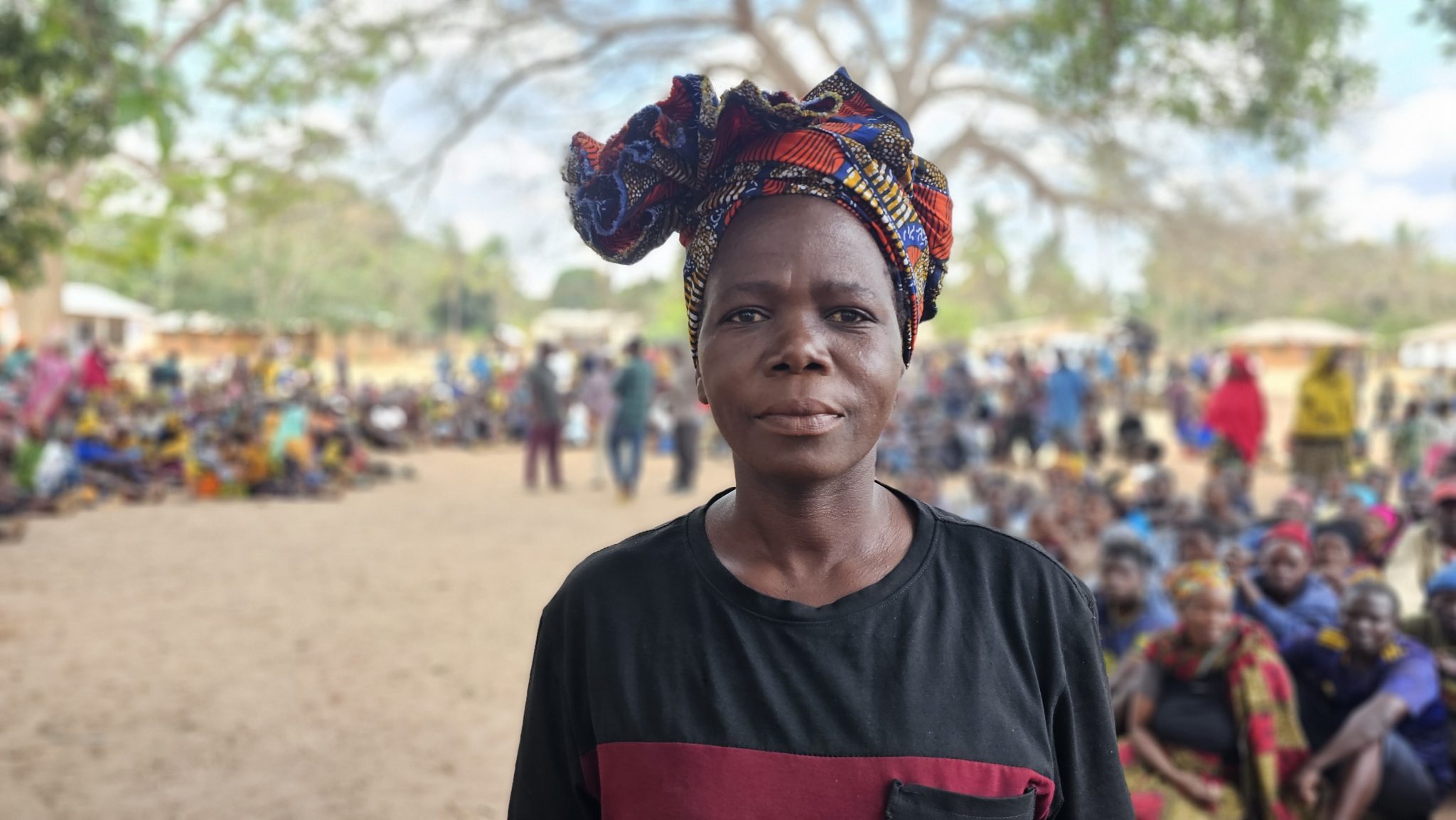
Joaquima carries the water for her whole family. For her four small children, her husband who works in the fields, and her three nieces who lost their father in a violent attack in which he was beheaded, and their mother shortly afterwards due to sickness.
The water she collects has a yellowish milky colour, is dirty, and full of parasites.
It makes us sick. There is no clear and clean water here for us. This is the only water that we have. So, we have to drink it to survive.
She was nine years old when she first walked to the river with her mother’s green bucket. Now, 26 years later she still walks.
I go to the water every single day. I walk when I am pregnant. I walk when I have just given birth. I walk when I am sick.
She walks for six hours every day, which equals 56.940 hours of her life walking for water, or 2,372 days, which amounts to 6.5 years. Joaquima, like many other women around the world, spent 6.5 years of her life just walking to fetch water. In those years, she walked about 3.5 times around the globe.
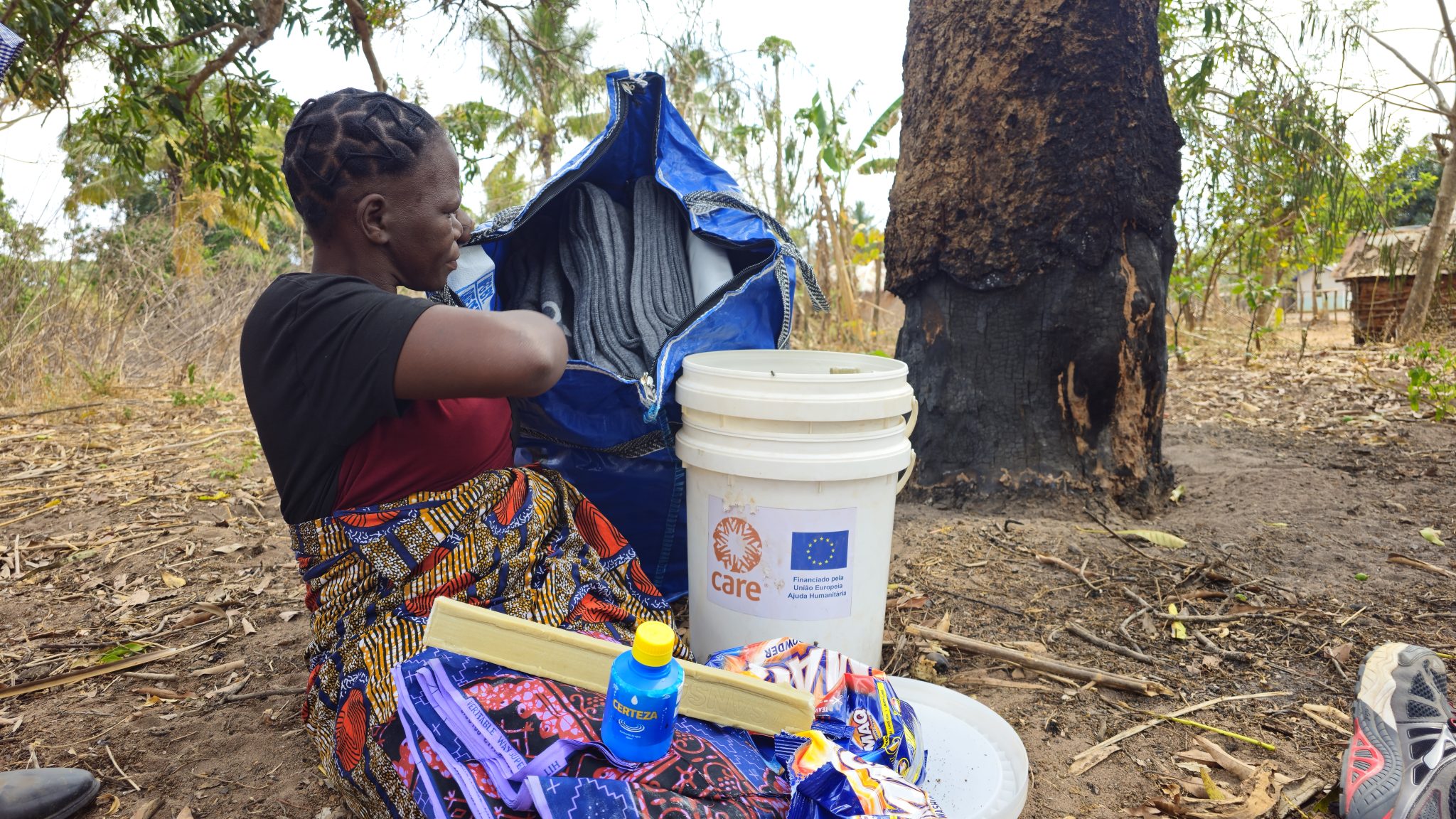
With funding from the European Union, CARE and its partner organisations support families like Joaquima’s, who have lost everything due to violence, displacement, and climate change. By constructing and rehabilitating wells, water points, and latrines, the water infrastructure in communities and displaced persons camps is being sustainably improved. CARE also trains water committees to maintain these facilities.
CARE and its partner organisations Save the Children, Norwegian People’s Aid, and ShelterBox are supporting families in Cabo Delgado, Nampula, and Niassa who have been impacted by violence, displacement, and climate change. Funded by the European Union, the project aims to strengthen community resilience by enhancing shelter and improving water, sanitation, and hygiene infrastructure.
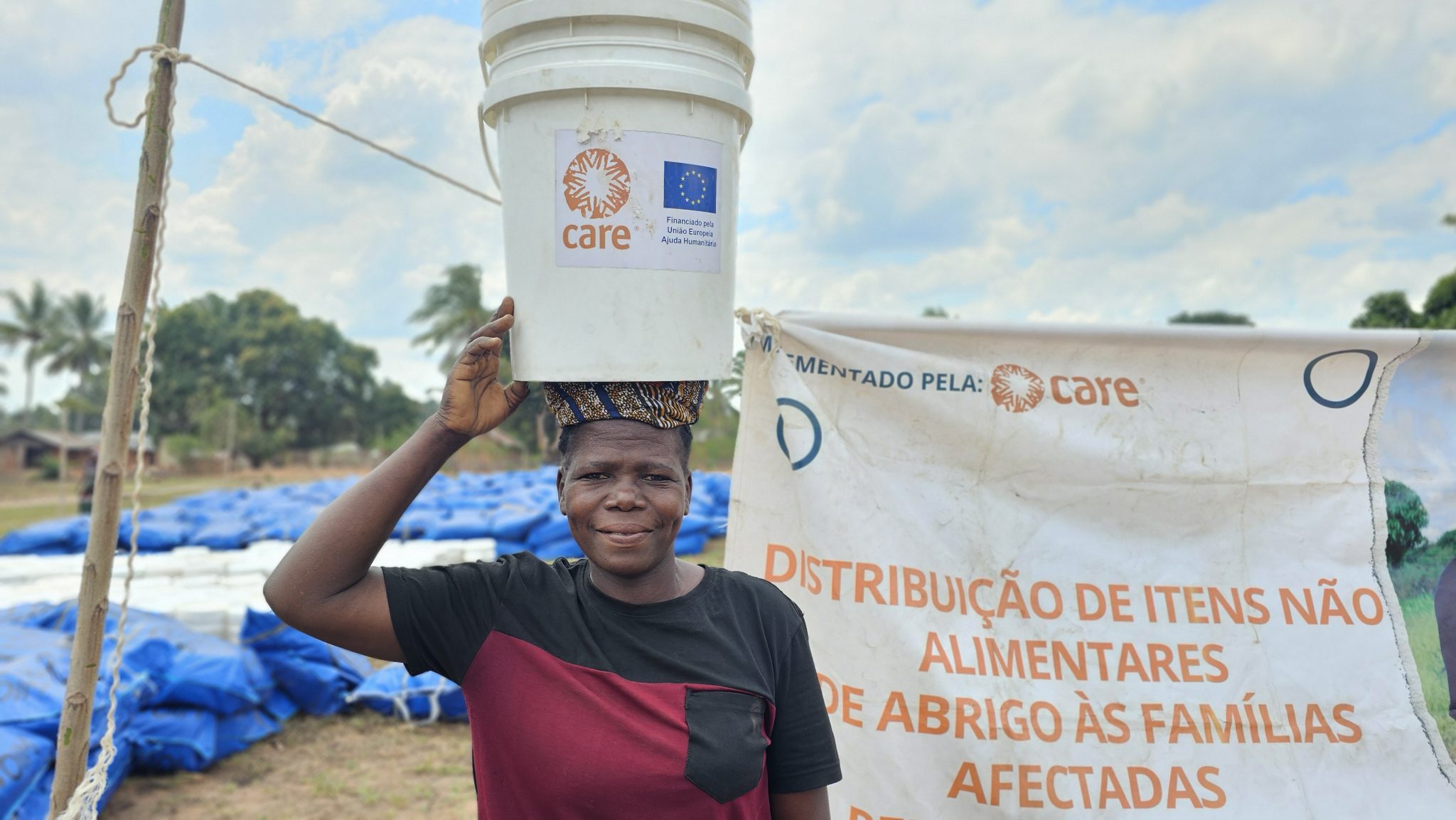
Participants receive essential life-saving aid supplies, including kitchen utensils, hygiene products, and shelter items. The project also focuses on emergency and disaster preparedness while providing psychosocial support, gender-based violence and child protection services, and creating safe spaces for women and children.
Want to contribute? Donate to CARE Australia today, or find more ways to give and support our humanitarians worldwide.