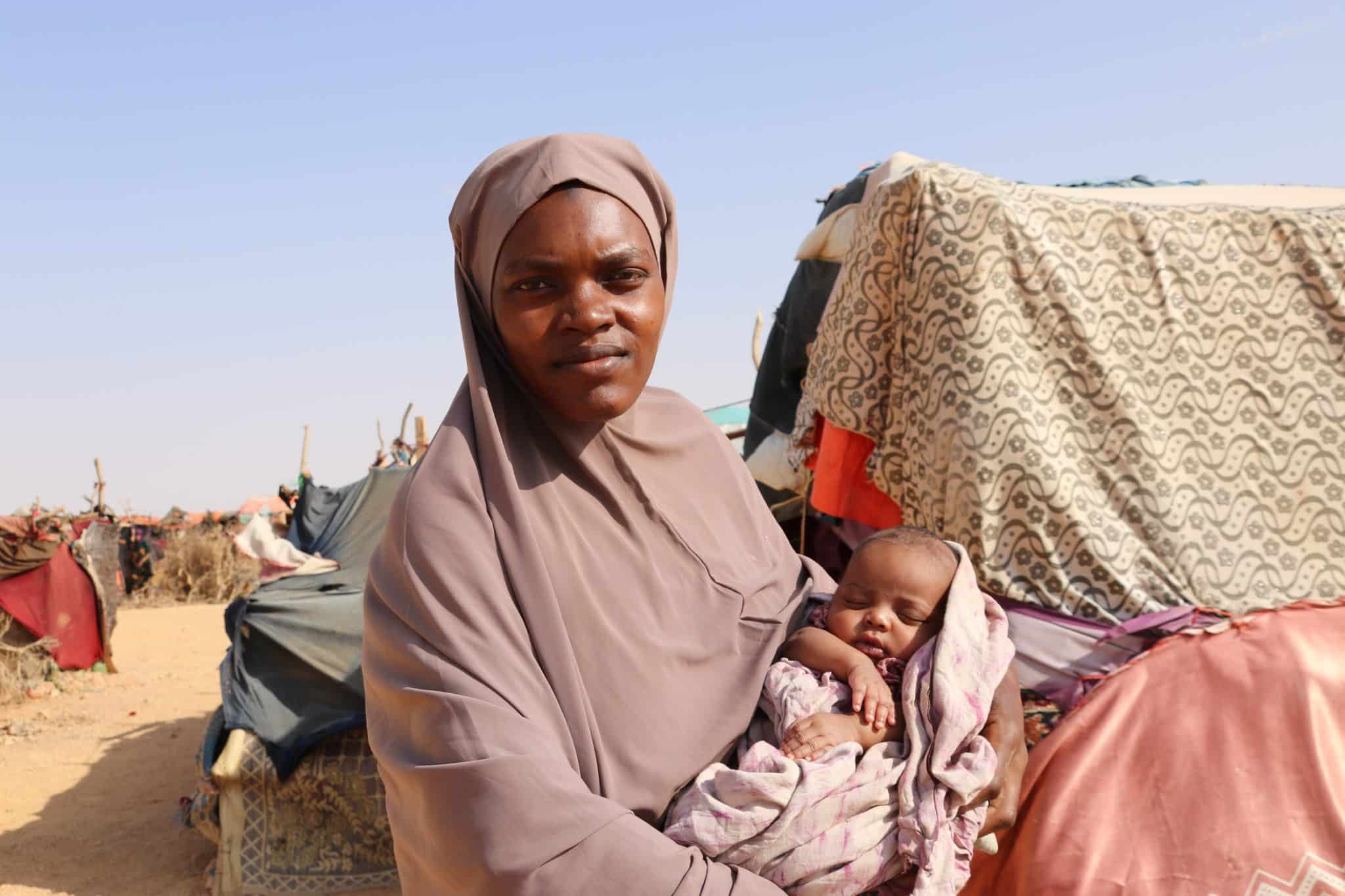
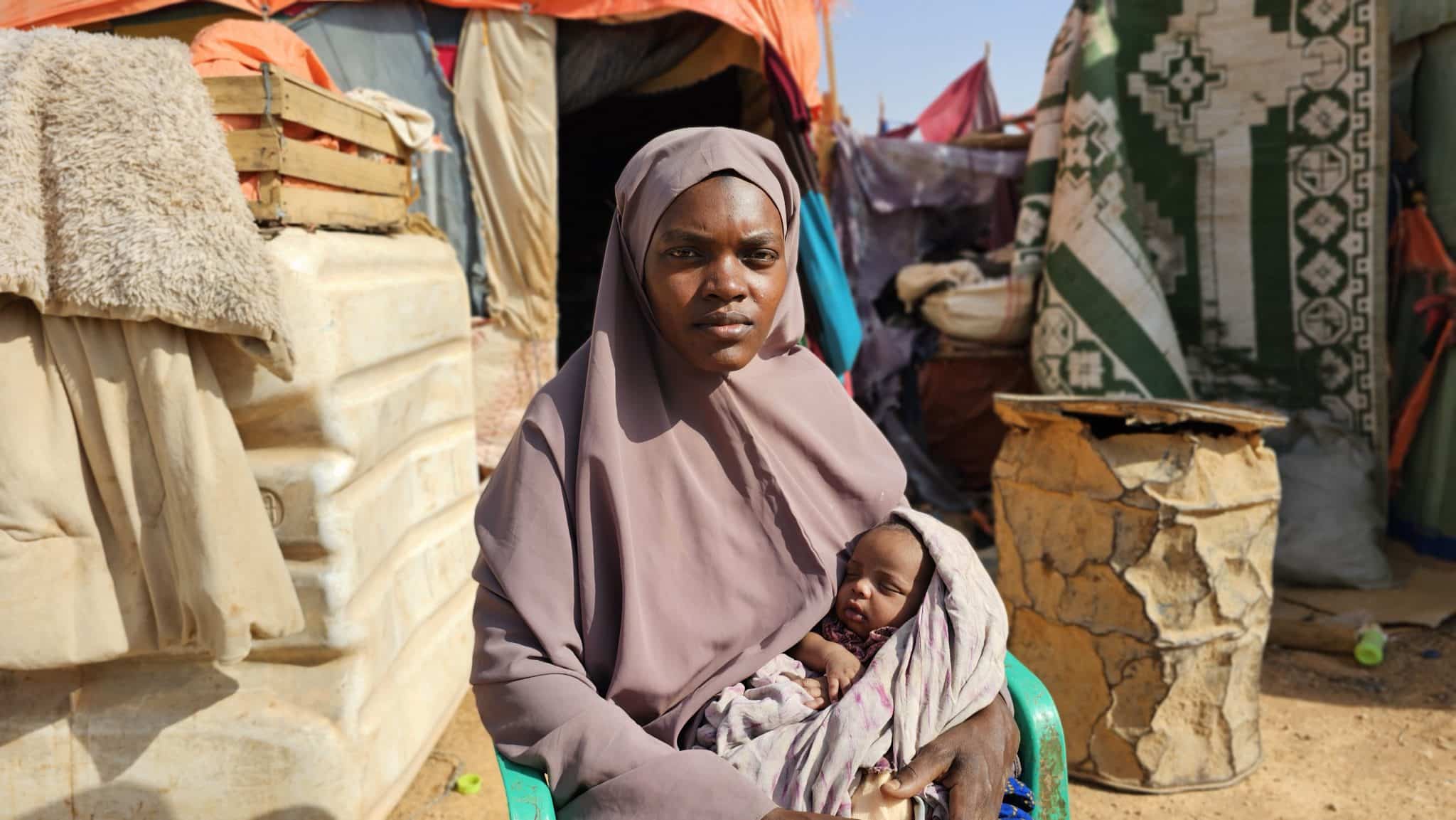
Bushra is 30 days old. Her mother Khadra, 26, nearly did not survive her delivery. “I was so weak and malnourished. My body could not take it, we both nearly died,” Khadra says.
They both survived because they had access to a CARE health facility in the displacement camp where they live, 4km from Dhahar in Somalia.
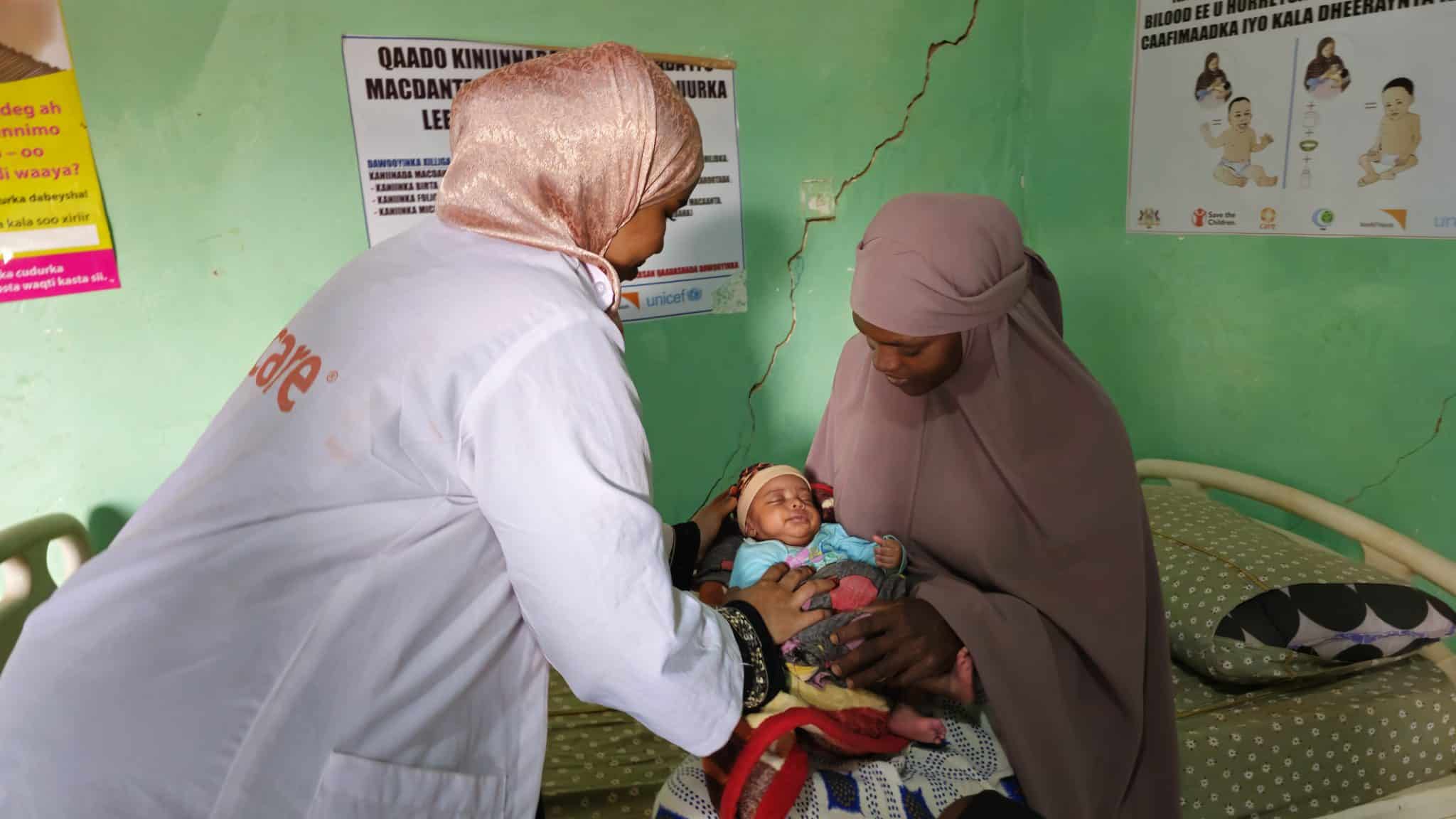
Midwife Hayat helped Khadra deliver Bushra safely. She was treated and monitored, and they now receive postnatal care to make sure that Bushra is developing well and Khadra is healthy.
This health facility is life for us. My child would have died. I could not have delivered her without them.
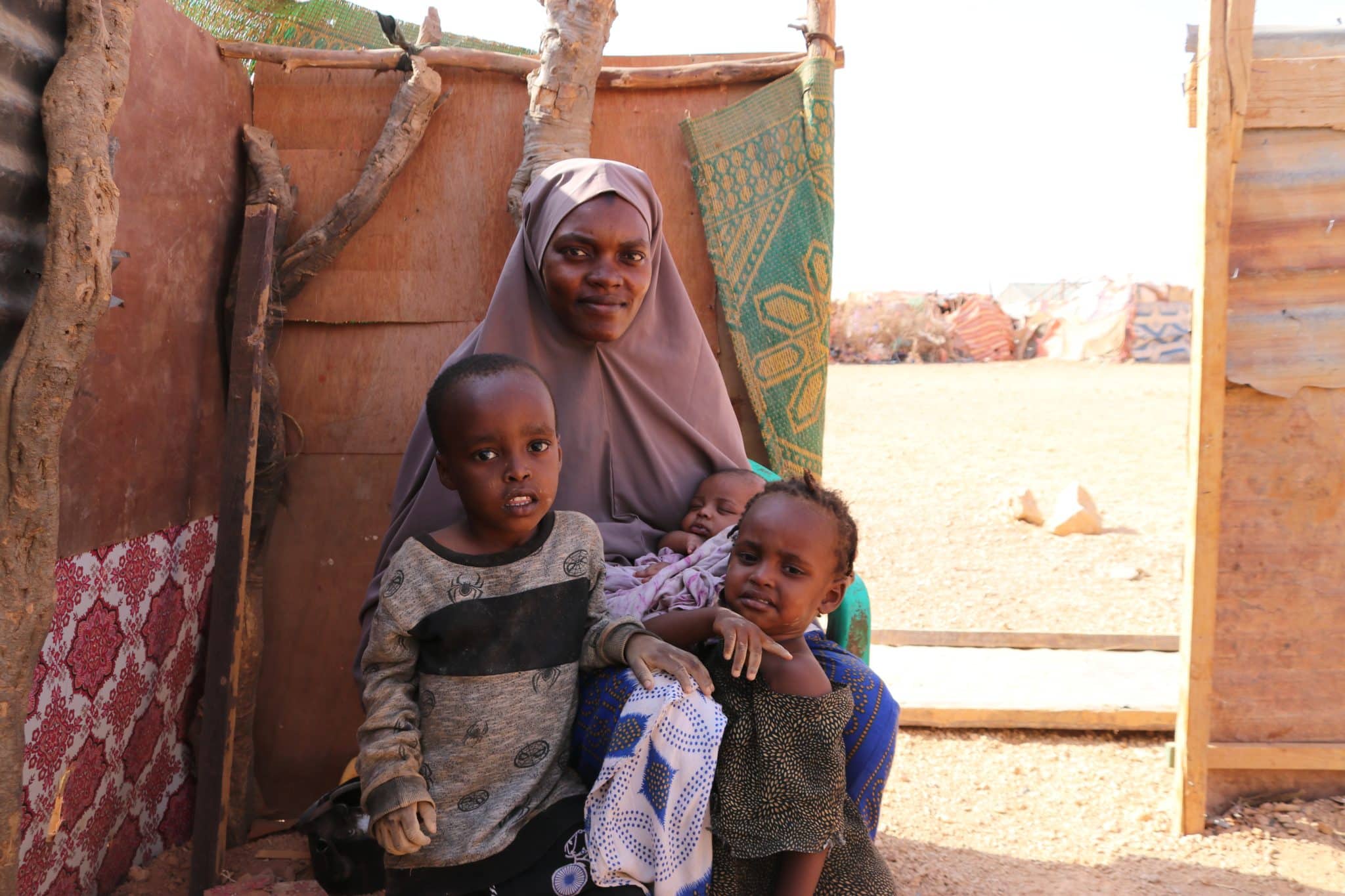
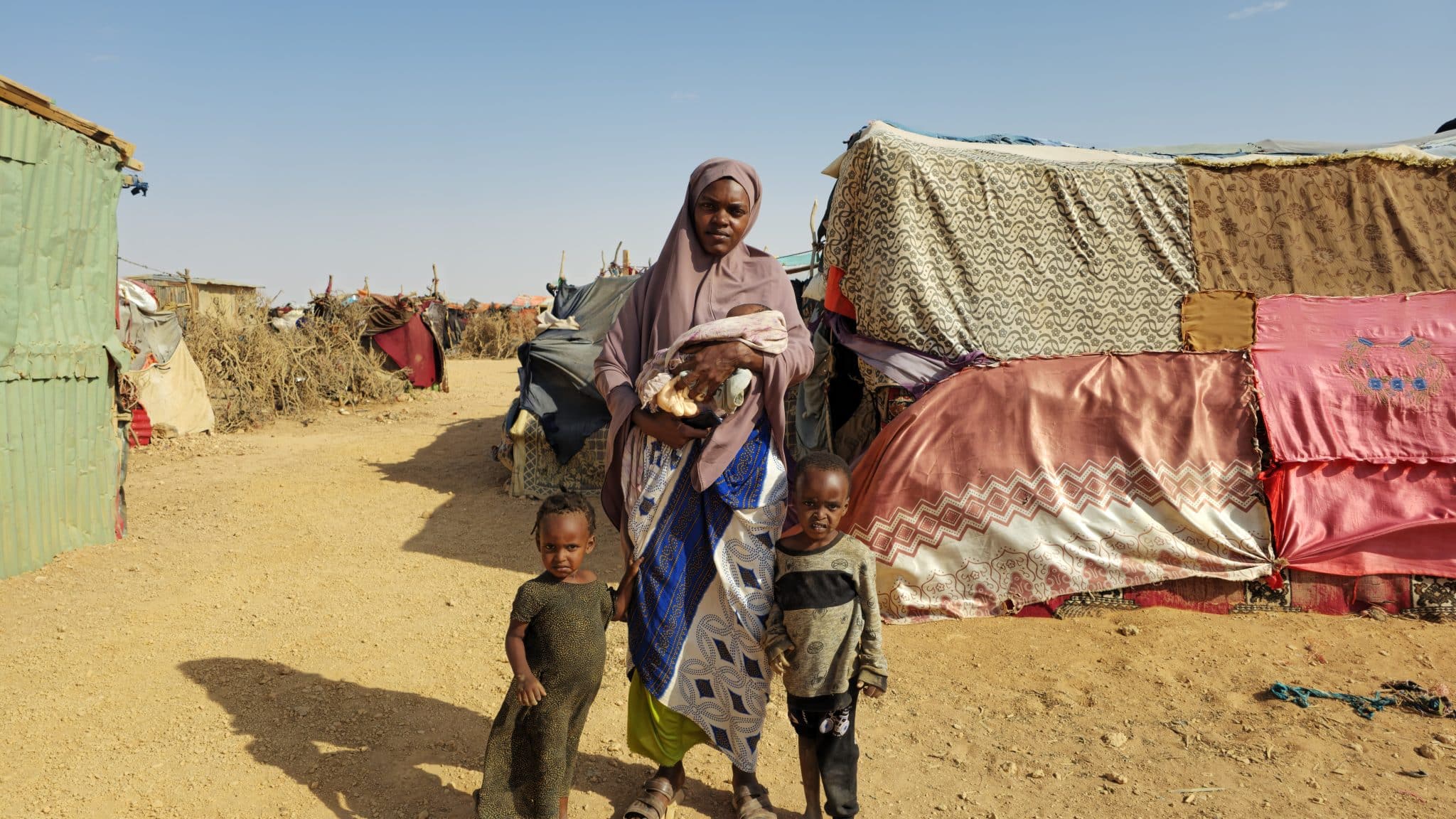
Khadra has five children in total. She fled Ethiopia with her children after her husband left her last year and she had no way of surviving. “My children were starving there, and I had no one left to help me, so we walked until we found a place where we could rest,” says Khadra.
She married very young, when she was 14, and had her first child a year later. Today, she is eleven years old. “I was very young when my first daughter came. She now helps me with the baby.”
Khadra used to work as a cleaner in Ethiopia and was able to earn up to 70 USD each month, but she lost her job when she got pregnant with Bushra. Now, in Dhahar, she collects metal scraps and sells them.
This is now our only source of income, and I do earn about 4 to 5 USD each week. That is hardly enough for one meal a day.
Khadra works from early morning until the evening, searching for metal to sell. The day before she delivered Bushra, she worked for 9 hours straight.
Four days after giving birth to Bushra, I started collecting again.
During those days while in the CARE health facility, she took a loan to feed her children. Now, she has to leave her baby with her 11-year-old while she works. “I have no other choice. If we want to eat and have water, then I need to work, or we will die.”
Khadra herself is malnourished and her body is very weak, so she also has no milk to breastfeed Bushra and relies on the therapeutic milk she receives from the CARE facility.
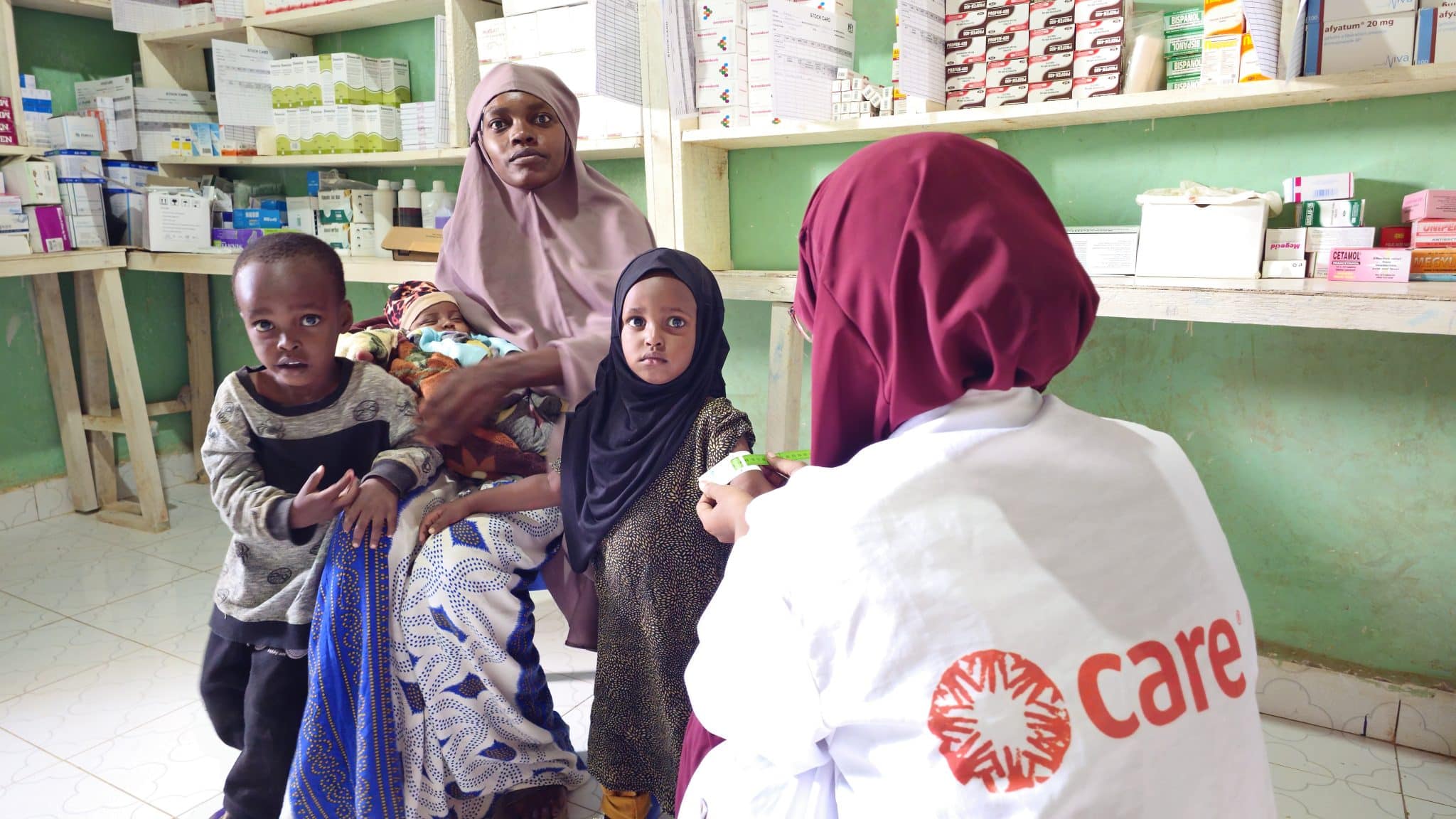
Not only Bushra, but also her other children are healthy today because of the CARE health centre. 4-year-old Yonis and 2.5-year-old Issra were severely malnourished just a few months ago. They visited the CARE health facility and received Plumpy’Nut, a life-saving therapeutic peanut paste used to treat severe acute malnutrition in children. They were also treated for fever and diarrhoea there. “They were very sick and weak and I did not know what to do to keep them alive. But the CARE health worker came and told me about the free health care I could get for them. I was so relieved,” Khadra says.
Both children are now healthy. The nutrition screening tape used to assess malnutrition shows they are in the green zone, indicating they have recovered from malnutrition.
However, funding for this CARE health facility finished at the end of September 2026. With the international funding cuts, CARE already had to close 50 health facilities and more are in danger to be shut down in the future. In Dhahar, this and nine other health facilities are now closed.
“We do not have income. We have no opportunities here. We have no shelter, water and no food. If we also do not have medicine and treatment for our starving children, then life is no longer possible here. Without this health facility there is no life! Pregnant women like me will die and cannot deliver their babies. If there is no longer this support here, our children will die of hunger,” says Khadra.
This story was written by Sarah Easter, CARE Emergency Communications Officer.
About CARE in Somalia
CARE has been working in Somalia since 1981. Our main program activities since then have included projects in water and sanitation, sustainable pastoralist activities, civil society and media development, small-scale enterprise development, primary school education, teacher training, adult literacy, and vocational training. We work in partnership with Somali and international aid agencies, civil society leaders and local authorities. Most recently, CARE has broadened its work to include economic empowerment, food and nutrition security, humanitarian response and reproductive health.
To support women like Khadra and her children facing health and nutrition challenges in countries like Somalia, donate to CARE’s Global Emergency Fund today.